For more than a century, history books gave the title of “father of recorded sound” to Thomas Edison, whose 1877 recitation of Mary Had a Little Lamb was widely cited as the very first audio track. That long-standing narrative was overturned in 2008: the person who actually captured the first soundwave in human history wasn’t Edison at all, but the French inventor Édouard-Léon Scott de Martinville.
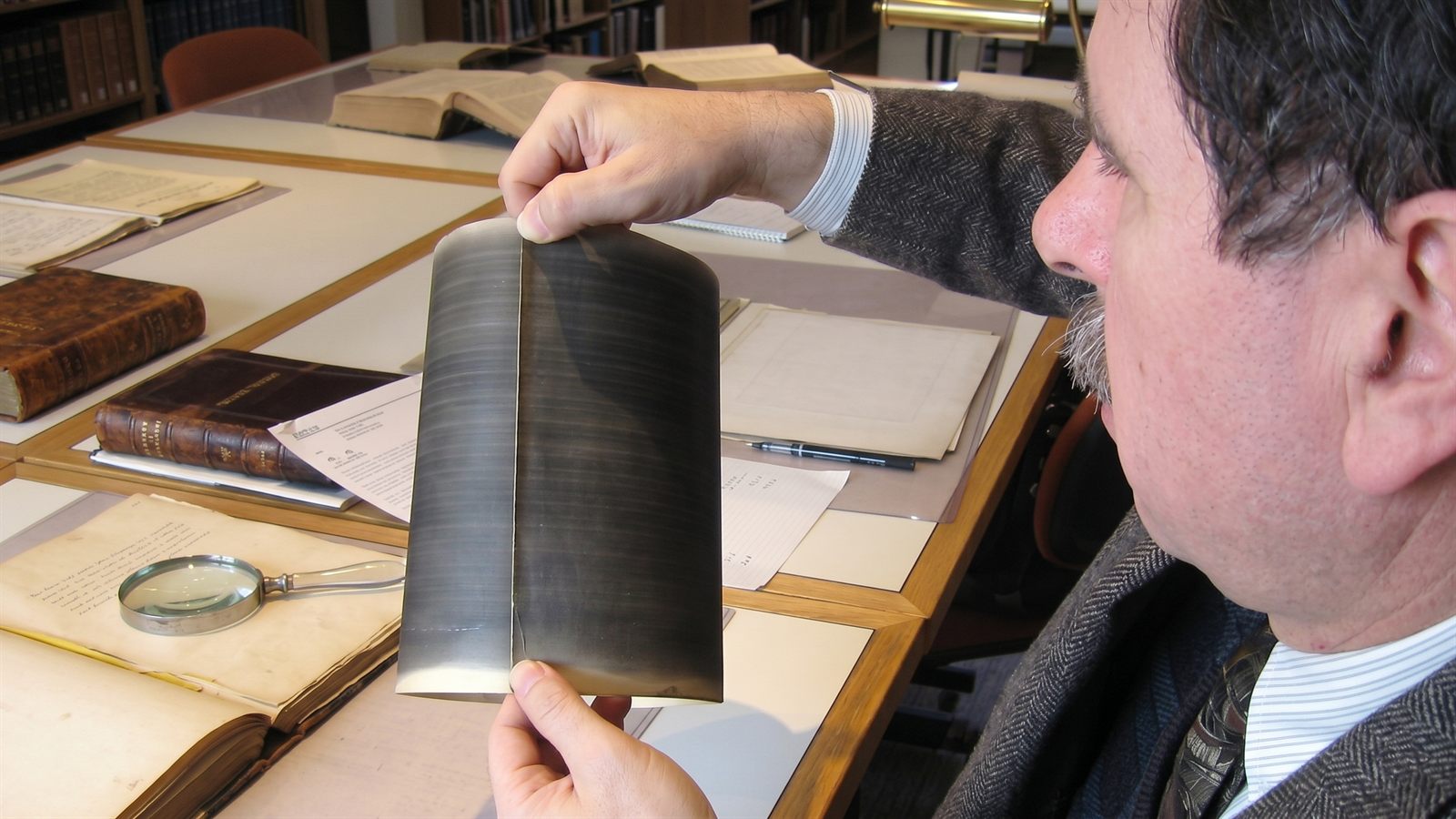
Seventeen years before Edison, in 1860, Scott used a device of his own design called the Phonautograph to etch soundwaves onto sheets of soot-blackened paper. Curiously, Scott never intended for these recordings to be played back — he imagined them as a visual form of shorthand, something you could “read” by tracing the waveform with your eyes. As a result, his recording of the French folk song Au Clair de la Lune sat silently on paper for nearly a century and a half, undecipherable to anyone who tried.
It wasn’t until researchers at Lawrence Berkeley National Laboratory (LBNL) applied modern optical scanning and digital signal processing that those ghostly lines on blackened paper could finally be coaxed back into sound. When this 150-year-old whisper returned to the world, it not only restored Scott’s rightful place in audio history — it also let us hear, in its rawest form, humanity’s earliest dream of capturing the human voice.